
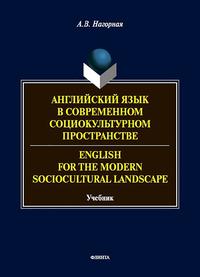
Английский язык для современного социокультурного ландшафта = English for the Modern Sociocultural Landscape
Покупка
Новинка
Издательство:
ФЛИНТА
Год издания: 2026
Кол-во страниц: 452
Дополнительно
Вид издания:
Учебное пособие
Уровень образования:
ВО - Бакалавриат
ISBN: 978-5-9765-5949-3
УДК: 811.111+316.7(075.8)
Артикул: 898809.01.99
Доступ онлайн
700 ₽
В корзину
Учебник предназначен для студентов лингвистических направлений подготовки, владеющих английским языком на уровнях C1—C2, и ориентирован на развитие профессиональной коммуникативной компетенции в академической и межкультурной среде. В центре внимания находятся ключевые социокультурные тенденции XXI века, включая метамодернизм, культ знаменитостей, культуру достижений, новую потребительскую культуру, трансформацию восприятия времени, эмоционализацию общества, новый интеллектуализм, экологическое сознание и современные представления о телесности и креативности.
Учебник включает аутентичные тексты, дискуссионные задания, упражнения на развитие лексических, грамматических и стилистических навыков, а также индивидуальные и групповые проектные задания. Значительная часть материалов основана на современных исследованиях в области гуманитарных наук, что позволяет интегрировать развитие языковых компетенций с освоением актуальной научной проблематики. Пособие способствует развитию критического мышления, навыков академической коммуникации и междисциплинарного анализа.
Тематика:
ББК:
УДК:
ОКСО:
- ВО - Бакалавриат
- 44.03.01: Педагогическое образование
- 45.03.02: Лингвистика
ГРНТИ:
Скопировать запись
Фрагмент текстового слоя документа размещен для индексирующих роботов
А.В. Нагорная
АНГЛИЙСКИЙ ЯЗЫК
В СОВРЕМЕННОМ
СОЦИОКУЛЬТУРНОМ
ПРОСТРАНСТВЕ
ENGLISH
FOR THE MODERN
SOCIOCULTURAL
LANDSCAPE
Учебник
Москва
Издательство «ФЛИНТА»
2026
УДК 811.111+316.7(075.8)
ББК 81.432.1+71.06я73
Н16
Ре ц е н з е н ты:
д-р филол. наук, доцент, проф. кафедры лингвистики
и профессиональной коммуникации в области гуманитарных
и прикладных наук МГЛУ Л.С. Гуревич;
канд. филол. наук, доцент, проф. кафедры английского языка
Ульяновского государственного педагогического университета
им. И.Н. Ульянова Ю.А. Лобина
Ред а кто р
канд. филол. наук, доцент, академический руководитель программы
«Иностранные языки и межкультурная коммуникация»
Школы иностранных языков Национального исследовательского университета
«Высшая школа экономики» А.В. Бакулев
Н16
Нагорная А.В.
Английский язык в современном социокультурном пространстве. = English for the Modern Sociocultural Landscape : учебник / А.В. Нагорная. — Москва : ФЛИНТА, 2026. — 452 с. —
ISBN 978-5-9765-5949-3. — Текст : электронный.
Учебник предназначен для студентов лингвистических направлений
подготовки, владеющих английским языком на уровнях C1—C2, и ориентирован на развитие профессиональной коммуникативной компетенции
в академической и межкультурной среде. В центре внимания находятся
ключевые социокультурные тенденции XXI века, включая метамодернизм, культ знаменитостей, культуру достижений, новую потребительскую культуру, трансформацию восприятия времени, эмоционализацию
общества, новый интеллектуализм, экологическое сознание и современные представления о телесности и креативности.
Учебник включает аутентичные тексты, дискуссионные задания,
упражнения на развитие лексических, грамматических и стилистических навыков, а также индивидуальные и групповые проектные задания. Значительная часть материалов основана на современных исследованиях в области гуманитарных наук, что позволяет интегрировать
развитие языковых компетенций с освоением актуальной научной проблематики. Пособие способствует развитию критического мышления,
навыков академической коммуникации и междисциплинарного анализа.
УДК 811.111+316.7(075.8)
ББК 81.432.1+71.06я73
ISBN 978-5-9765-5949-3
© Нагорная А.В., 2026
© Издательство «ФЛИНТА», 2026
CONTENTS
Introduction .......................................................................................................6

U N I T 1. METAMODERN CULTURE ......................... 8
Part 1.	 Oscillating Worlds: The Metamodern Mindset ....................................8
Part 2.	 Identity in the Metamodern Age ........................................................15
Part 3.	 Neither / Nor, Both / And: Inside Metamodern Art ...........................25
Part 4.	 Memes as Metamodern Artifacts .......................................................34
Part 5.	 Final Discussion .................................................................................41
Part 6.	 Vocabulary and Grammar Review .....................................................44

U N I T 2. THE AGE OF CELEBRITY ........................ 49
Part 1. A Very Brief History of Celebrity ......................................................49
Part 2. The Many Faces of Celebrity .............................................................57
Part 3. The Dark Side of Celebrity ................................................................64
Part 4. Celebrity Activism: From Spotlight to Social Change ......................71
Part 5.	 Final Discussion .................................................................................76
Part 6.	 Vocabulary and Grammar Review .....................................................79
U N I T 3. CHASING MORE:

THE CULTURE OF ACHIEVEMENTISM ..................... 83
Part 1. Achievement as a Value .....................................................................83
Part 2. Building an Achievement Culture ......................................................91
Part 3. The Cost of Achievement ...................................................................97
Part 4. From Rags to Riches ........................................................................105
Part 5.	 Final Discussion ...............................................................................113
Part 6.	 Vocabulary and Grammar Review ...................................................115
U N I T 4. FROM LUXURY TO NECESSITY:

THE MAKING OF MODERN CONSUMERS ................ 120
Part 1.	 The Rise of the Consumer ................................................................120
Part 2.	 Contemporary Patterns of Consumer Behavior ...............................129
Part 3.	 Ethics in the Age of Consumption ...................................................136
Part 4.	 Anti-Consumerism: Owning Less, Living More .............................142
Part 5.	 Final Discussion ...............................................................................150
Part 6.	 Vocabulary and Grammar Review ...................................................154
U N I T 5. OUT OF TIME:

MODERN LIFE IN OVERDRIVE .......................... 158
Part 1.	 The Measured Hour and the Felt Moment:
Perspectives on Time .......................................................................158
Part 2.	 The Hurry Habit and the Slow-Time Cure .......................................165
Part 3.	 Time Poverty ....................................................................................173
Part 4.	 The Power of Now: Practicing Mindfulness ....................................183
Part 5.	 Final Discussion ...............................................................................190
Part 6.	 Vocabulary and Grammar Review ...................................................192

U N I T 6. THE EMOTIONAL SOCIETY .................... 197
Part 1.	 Beyond IQ: The Rise of Emotional Intelligence ..............................197
Part 2.	 Positive Thinking: The Bright Side and Its Shadow ........................207
Part 3.	 Neo-Emotions ..................................................................................216
Part 4.	 Too Much Feeling? ..........................................................................226
Part 5.	 Final Discussion ...............................................................................235
Part 6.	 Vocabulary and Grammar Review ...................................................239
U N I T 7. BRAINS IN FASHION:

THE RISE OF INTELLECTUAL CHIC ..................... 243
Part 1.	 From Expertise to Influence: The Changing Face
of Intellect ........................................................................................243
Part 2.	 Popular Science: From Papers to People .........................................253
Part 3.	 Brain Rot and Its Antidote ...............................................................263
Part 4.	 Brains on Display .............................................................................271
Part 5.	 Final Discussion ...............................................................................280
Part 6.	 Vocabulary and Grammar Review ...................................................282

U N I T 8. CREATIVITY IN ACTION ....................... 287
Part 1.	 Creativity Defined ............................................................................287
Part 2.	 Creativity in Science: The Interplay of Reason
and Imagination ...............................................................................295
Part 3.	 The Quiet Practice of Everyday Creativity ......................................305
Part 4.	 Two Kinds of Intelligence, One Creative Quest ..............................314
Part 5.	 Final Discussion ...............................................................................322
Part 6.	 Vocabulary and Grammar Review ...................................................326
U N I T 9. RETHINKING LIFE:

ECOLOGY AS OUR EVERYDAY LENS .................... 332
Part 1.	 Interconnected: Foundations of Ecological Thought .......................332
Part 2.	 An Ecological Perspective on Culture .............................................341
Part 3.	 Ecology as a Lens on Human Behavior ...........................................350
Part 4.	 Ecology and Language .....................................................................361
Part 5.	 Final Discussion ...............................................................................370
Part 6.	 Vocabulary and Grammar Review ...................................................374
U N I T 10. BETWEEN FLESH AND FLOW:

THE BODY IN METAMODERN CULTURE ................. 379
Part 1.	 What’s in a Body? ............................................................................379
Part 2.	 Flesh and Self: The Body as Identity ...............................................388
Part 3.	 Biohacking: Beyond Human Limits ................................................398
Part 4.	 The Human Body in Contemporary Art ...........................................409
Part 5.	 Final Discussion ...............................................................................415
Part 6.	 Vocabulary and Grammar Review ...................................................418
Answer Key ...................................................................................................423
References .....................................................................................................444
INTRODUCTION
English for the Modern Sociocultural Landscape is designed
for master students (levels  C1—C2) who seek to develop practical
English-language skills within the context of today’s rapidly
changing global society. In the modern world, English functions not
only as a means of communication, but also as a tool for academic
collaboration, professional interaction, intercultural dialogue, and
access to information.
This textbook aims to help learners build communicative
competence while exploring contemporary sociocultural issues that
shape modern life. Beginning with an overview of metamodern
culture whose formation we are witnessing nowadays, the textbook
proceeds to examine major sociocultural trends that are particularly
relevant to today’s world, including celebritism, achievementism,
neo-consumerism, changing perceptions of time, emotionalism,
new intellectualism, creativity, ecological consciousness, and
representations of the human body in culture.
The materials presented in the book encourage students to
engage with authentic and trendy language, develop critical
thinking, and improve their ability to communicate effectively in
diverse environments. A considerable proportion of the content
draws on 21st-century research papers, enabling students not only
to enhance their academic speaking skills, but also to familiarize
themselves with the latest advances in the Humanities, particularly
the evident trends toward the democratization of knowledge and
interdisciplinary collaboration.
The textbook includes 10 thematic units, each of them made up
of 6  parts. Parts 1—4  present different aspects of the issue under
consideration, Part  5 contains tasks for the general discussion of
the material, and Part  6 suggests activities for vocabulary and
grammar review. Although the main linguistic focus is on expanding
and enriching students’ vocabulary, each unit also explores a
specific grammatical phenomenon and includes activities aimed at
developing stylistic competence.
The course materials were tested by master students at the
School of Foreign Languages, National Research University Higher
School of Economics (2025—2026). The author expresses gratitude
for the students’ advice and constructive criticism.
METAMODERN CULTURE
Metamodernism is an attempt to
come to terms with what is happening
all around us, not a blueprint for how
to achieve it.
Timotheus Vermeulen
PA RT 1
OSCILLATING WORLDS:
THE METAMODERN MINDSET
1. What does the prefix “meta” mean? Consider the concepts below
and identify its semantic features.
metacognition
metaphysics
metadata
metacommentary
metalanguage
metatheory
2. In pairs or small groups, brainstorm ideas for a new “meta-word”
and explain its meaning. E.g. meta-reading: thinking about the way we
read, not just the content of what we have read.
3. In your opinion, what type of culture does the term “metamodernism” suggest?
4. Quiz: For each cultural formation below, select all features that
apply. Then check your choices in the answer key.
1.	 Premodernism (before the late 19th century)
a) Truth grounded in religion and tradition
b) Strong belief in individual autonomy
c) Skepticism toward all authority
d) Fixed social roles and hierarchical order
2.	 Modernism (late 19th — mid 20th century)
a) Optimism and belief in progress
b) Skepticism toward grand narratives
c) Faith in reason and science
d) Sincerity and irony coexist
3.	 Postmodernism (mid — late 20th century)
a) Questioning of objective truth
b) Fluid, plural, and negotiated identities
c) Skepticism toward grand narratives
d) Faith in reason and science
4.	 Metamodernism (early 21st century — present)
a) Experimentation and self-reflection
b) Sincerity and irony coexist
c) Optimism and belief in progress
d) Fluid, plural, and negotiated identities
5. Read the summary of an essay that sparked academic interest in
metamodernism and trace the features highlighted in the quiz.
In their influential essay “Notes on Metamodernism,” Timotheus
Vermeulen and Robin van den Akker argue that contemporary
culture can no longer be adequately described as postmodern.
Instead, they propose the term metamodernism to capture an
emerging sensibility that both reacts to and moves beyond
postmodernism. This new cultural logic is characterized not by a
fixed position, but by a constant oscillation between modernist and
postmodernist attitudes.
While modernism was defined by a belief in progress, grand
narratives, and universal truths, and postmodernism by skepticism,
irony, and the deconstruction of such certainties, metamodernism
inhabits a space between these poles. It does not resolve the
tension between them; rather, it continuously moves back and
forth, embracing both sincerity and irony, hope and doubt,
construction and deconstruction. This oscillation is not indecision,
but a productive dynamic that defines contemporary cultural
expression.
Vermeulen and van den Akker emphasize that metamodernism
reflects a renewed desire for meaning, depth, and engagement,
even while remaining aware of the impossibility of fully recovering
modernist certainty. In this sense, metamodernism is marked by
what they describe as a kind of “informed naivety” or “pragmatic
idealism”: a willingness to act as if meaning, truth, and progress are
attainable, despite knowing the critiques leveled against them by
postmodern thought.
This sensibility can be observed across various cultural domains,
including art, architecture, and literature. Contemporary works often
display a tension between earnestness and self-awareness, striving
for authenticity while acknowledging their own constructed nature.
Rather than rejecting the past, metamodernism re-engages with it,
selectively drawing on both modernist ambition and postmodern
critique.
Importantly, metamodernism is not presented as a rigid theory or
a clearly defined movement. Instead, it is understood as a “structure
of feeling,” a term borrowed from cultural theory to describe a
shared but diffuse cultural mood. It captures how individuals and
societies today navigate uncertainty, complexity, and contradiction.
Ultimately,
“Notes
on
Metamodernism”
suggests
that
contemporary culture is defined not by the end of grand narratives,
as postmodernism claimed, but by a renewed — if cautious and selfconscious — search for meaning. Metamodernism thus reflects an
attempt to move forward by oscillating between past frameworks,
embracing their tensions rather than resolving them.
Похожие Показать весь список
Доступ онлайн
700 ₽
В корзину