
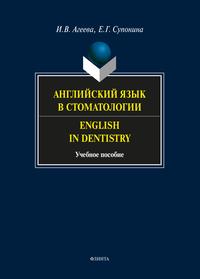
Английский в стоматологии. English in Dentistry
Покупка
Новинка
Тематика:
Английский язык
Издательство:
ФЛИНТА
Год издания: 2025
Кол-во страниц: 120
Дополнительно
Вид издания:
Учебное пособие
Уровень образования:
ВО - Специалитет
ISBN: 978-5-9765-1572-7
Артикул: 618430.02.99
Доступ онлайн
250 ₽
В корзину
Цель пособия - формирование у студентов англоязычной коммуникативной компетенции, что позволяет использовать английский язык в качестве инструмента профессиональной коммуникации и самообразования.
Пособие состоит из краткого вводного лексико-грамматического курса и основного курса, включающего 5 тематических разделов, каждый из которых заканчивается заданием коммуникативно-творческого, проектного характера. Оригинальные профессионально-ориентированные тексты дают возможность в процессе изучения языка получить необходимые сведения по будущей специальности. Комплекс разнообразных упражнений поможет овладеть профессионально ориентированной терминологией, привить навыки чтения и перевода текстов по специальности, общаться на профессиональные темы.
Для студентов стоматологических факультетов медицинских вузов, а также для стоматологов, совершенствующих свои знания по английскому языку в системе постдипломного образования или самостоятельно.
Тематика:
ББК:
УДК:
ОКСО:
- Среднее профессиональное образование
- 31.02.01: Лечебное дело
- ВО - Специалитет
- 31.05.03: Стоматология
ГРНТИ:
Скопировать запись
Фрагмент текстового слоя документа размещен для индексирующих роботов
Москва
Издательство «ФЛИНТА»
И.В. Агеева
Е.Г. Супонина
гии
English in DEntistry
Учебное пособие
6-е издание, стереотипное
Агеева И.В.
Английский язык в стоматологии. English in Dentistry
учеб. пособие / И.В. Агеева, Е.Г. Супонина. — 6-е изд.,
стер. — Москва : ФЛИНТА, 2025. — 120 с. : ил. — ISBN
978-5-9765-1572-7. — Текст : электронный.
Цель пособия – формирование у студентов англоязычной коммуникативной компетенции, что позволяет использовать английский язык в качестве инструмента профессиональной коммуникации и самообразования.
Пособие состоит из краткого вводного лексико-грамматического курса и
основного курса, включающего 5 тематических разделов, каждый из которых заканчивается заданием коммуникативно-творческого, проектного характера. Оригинальные профессионально-ориентированные тексты дают
возможность в процессе изучения языка получить необходимые сведения
по будущей специальности. Комплекс разнообразных упражнений поможет
овладеть профессионально ориентированной терминологией, привить навыки чтения и перевода текстов по специальности, общаться на профессиональные темы.
Для студентов стоматологических факультетов медицинских вузов, а
также для стоматологов, совершенствующих свои знания по английскому
языку в системе постдипломного образования или самостоятельно.
УДК 811.111(075.8)
ББК 81.432.1я73
А23
А23
ISBN 978-5-9765-1572-7
© Агеева И.В., Супонина Е.Г., 2013
© Издательство «ФЛИНТА», 2013
УДК 811.111(075.8)
ББК  81.432.1я73
CONTENTS
INTRODUCTION..............................................................................................4
STOP and CHECK...........................................................................................18
MODULE 1
DENTISTRY HISTORY..................................................................................20
MODULE 2
DENTISTRY TODAY......................................................................................34
MODULE 3
DISEASES of TEETH......................................................................................53
MODULE 4
PREVENTIVE DENTISTRY..........................................................................70
MODULE 5
ENDODONTICS..............................................................................................86
GRAMMAR REVISION...............................................................................107
SUPPLEMENTARY ACTIVITIES..............................................................116
Introduction
Lesson 1
1. Make sure that you understand the following international words.
faculty, professional, special, final, laboratory, lecture, seminar, consultation, institute, University, doctor, dentist, examination, physics, anatomy,
biology, history, practical, theoretical, period, class, course, medicine.
Суффикс -al образует прилагательные от основ существительных:
experiment – experimental       эксперимент – экспериментальный
biology – biological                 биология – биологический
2. Name and translate the nouns from which the following adjectives
are formed.
biological, medical, theoretical, clinical, practical, pharmaceutical,
stomatological, dental, anatomical, chemical, microbiological, physical, professional.
3. Read the text.
I entered Penza State University to become a dentist. Now I'm a firstyear student. I take a course of dentistry at the University. The course
lasts for five years. During this period the students master the basis of
theoretical and practical medicine.
Every day we have practical classes in numerous theoretical and special subjects. We perform different laboratory tests, get consultations
from our teachers and attend lectures and seminars in anatomy, biology, history, chemistry and others. We work much in class, in the dissecting-room, at the university laboratories and libraries.
There are two semesters in the academic year. At the end of the winter
semester the students take exams in physics, Latin and English. They
have several credit tests, too. Final examinations are at the end of a
course of studies.
4. Fill in the gaps with the verbs from the list.
have (x2), work, enter, attend, take (x2), get, perform
a.
______________ the University
b.
______________ a course of dentistry
c.
______________ laboratory tests
d.
______________ practical classes
e.
______________ a number of examinations
f.
______________ consultations
g.
______________ several credit tests
h.
______________ lectures and seminars
i.
______________ in the dissecting-room
5. Fill in the blanks with the correct form of the verb to be or to
have.
Mike ..... absent today. He ..... ill.
Did you ..... any pain?
He ..... a pain in his stomach.
I ..... a first-year student.
I ..... many friends among college students.
At the University we ..... usually busy till 4.30 p.m.
Yesterday we ..... a very good time together.
 We ..... free the day after tomorrow.
..... we ..... a lecture in biology tomorrow?
  After break we ..... a lesson of Latin.
 I know that I must work hard ..... a good dentist in future.
 It ..... nice ..... able to talk to somebody in another language.
 What ..... faculties in English universities?
 Erythrocytes ..... red blood cells.
 These methods of treatment ..... extensive in the past years.
6. Put the correct form of be in the correct place.
1.	How you getting on?
2.	This a new method in restorative dentistry.
3.	you good at histology?
4.	No, I not a physician.
5.	My friend not a medical student.
6.	Hygeia the goddess of healing in Greece.
7.	What the most important developments during the Middle Ages?
8.	The names of many diseases Greek in origin.
7. Put the words into the correct order to form a sentence.
1.	a Faculty / at / of / the University / is / there / Stomatology
2.	there / patients / the hospital / in / are / many ?
3.	will / no / there / classes / be / tomorrow
4.	mistakes / any / aren't / in / essay / your / there
5.	week / last / an / interesting / there / lecture / was
8. Make the following interrogative using the words given in brackets.
1.	There are two terms in the first year of studies. (How many)
2.	There will be a lecture in histology tomorrow. (What / When)
3.	There are 16 universities that grant degrees in medicine in Great
Britain. (How many / Where)
4.	There were no classes yesterday. (When)
5.	At the head of each faculty there is a professor. (Who)
9. Read the text and answer these questions.
a.	Where does Jane work?
b.	At what time do late shifts start / finish?
c.	When does Jane go to work by bus?
d.	Does Jane go home by bus or by taxi?
e.	Does she work every day?
f.	 What lectures does she attend?
g.	What can she become when she has passed the State Finals?
Jane Johnson works in a surgical ward in a London hospital. Jane does
shift work, so she does not go to work at the same time every day. When
she is on an early shift, she goes on duty at 7 a.m. and comes off duty at
3 p.m. Late shifts start at 2 p.m. and finish at 10 p.m.
Jane always goes to work by bus when she is on an early shift. The bus
stops outside the out-patients' department. When she comes off duty at 10
p.m., she is usually rather tired, and takes the bus home. Sometimes she
goes to the taxi rank outside the main entrance of the hospital and goes
home by taxi.
Jane is not a qualified nurse. She is a student nurse, so she does not
work in the ward every day. On certain days, she has to attend lectures
on general nursing, anatomy and physiology, hygiene and various other
subjects. She wants to pass the State Final examinations and become a
State Registered Nurse.
10. Read through the second paragraph of the text and underline all
the words that can answer the question “How often”?
11. Put the following sentences into the negative.
1.	She works in the x-ray department.
2.	He usually studies hard.
3.	As a rule we meet at the weekends.
4.	It takes him long to get to the University.
5.	She often walks past the operating theatre.
6.	She does shift work.
7.	I want to attend lectures on anatomy.
12. Answer the questions in the same way.
I work in a hospital. – And Jane? She works in a hospital, too.
1.	I work in a surgical ward. – And Mary?
2.	I attend lectures every day. – And John?
3.	I want to pass the State Finals. – And Jane?
4.	I usually finish at 12 o'clock. – And Jane?
5.	I come off duty at 7.30 p.m. – And Jane?
6.	I have to go home now. – And Mary?
7.	After dinner I usually have a short rest. – And John?
13. Make questions using the model.
Ask the patient about his eyes.  – Do your eyes hurt?
Ask the patient about his head.  – Does your head hurt?
1.	back
2.	foot
3.	ears
4.	left arm
5.	right thigh
6.	stomach
7.	toes
8.	chest
9.	fingers
14. Complete the following sentences with the correct word from this
list your, his, her, my, our, its, their.
1.	Tell Mrs. Smith to raise ..... right arm.
2.	Would you straighten ..... left leg, please?
3.	The baby has a pain in ..... stomach.
4.	John has a cut on ..... thigh.
5.	Ask me to lower ..... arm.
6.	You have a rash on ..... shoulders.
7.	Ask her to hold ..... breath in.
8.	He's got a scar on ..... left forearm.
Lesson 2
1. Guess the meaning of the following words. Master their pronunciation.
sterile, procedure, infusion, catheterization, procedure, assist, therapy,
infarction, cerebral, thrombosis, pneumonia, injection, dose, action, effect.
2. Match the following English word-combinations with the Russian
ones.
1.	 surgical dressings
2.	 intravenous infusion
3.	 catheterization
4.	 side effects
5.	 cerebral haemorrhage
a.	 кровоизлияние в мозг
b.	 катетеризация
c.	 хирургические перевязки
d.	 побочные эффекты
e.	 внутривенное вливание
3. Do you remember Jane Johnson? She and her friend Joan Chapman are both nurses. Read the text and answer these questions.
a.	What sort of hospital is St. Peter's?
b.	When did Joan pass her State Final examinations?
c.	Is Jane working as a staff nurse now?
d.	Which sterile procedures did she learn to set trolleys for?
e.	Where is Jane working this month?
f.	 Which patients is she learning to nurse?
g.	What is she doing at the moment?
They work at Saint Peter's Hospital, a large teaching hospital in London. Joan did her training at St. Peter's and last year she passed her State
Finals and qualified. She is now working as a staff nurse in a men's medical ward.
Jane is a student and is still training. Last month she worked in one of
the hospital's surgical wards. She learned to set trolleys for sterile procedures such as surgical dressings, intravenous infusion and catheterization. She carried out certain procedures herself and assisted doctors with
others. Sometimes she took patients to the x-ray department or to the
occupational therapy unit.
This month Jane is working in the same ward as Joan. She is learning to nurse patients suffering from diseases such as cardiac infarction,
cerebral haemorrhage, thrombosis and pneumonia. At the moment, she
is helping a staff nurse to give injections. The staff nurse is explaining
to her the doses, action and side effects of the drugs they are administering.
4. Read through the second paragraph of the text and state the tense
of the verbs.
5. Give the infinitive of the underlined verbs in the text. Pay attention
to the pronunciation of “-ed”.
6. Read through the text and find all the words and phrases that tell
us “when” something happens.
7. Change the sentences in the same way.
Jane goes on duty at 7 a.m.  Yesterday – Jane went on duty at 7 a.m. yesterday.
1.	Jane has to work late.


Yesterday –
2.	We are very tired.


Yesterday –
3.	They are giving injections.


Yesterday –
4.	She is taking a patient to the x-ray department.
Yesterday –
5.	You nurse pneumonia patients.


Yesterday –
6.	A doctor is doing a ward round.


Yesterday –
8. Ask questions in the same way.
Ask if he went home. – Did he go home?
1.	Ask if she passed her State Finals.
2.	Ask if she qualified last year.
3.	Ask if she gave Mr. Jones an injection.
4.	Ask if she assisted Dr. Brown.
5.	Ask if she worked in the occupational therapy department.
6.	Ask if she found out who he was.
7.	Ask if they learned to set trolleys.
8.	Ask if she did her training here.
9. Change the sentences in the same way.
She always helps the staff nurse. At the moment – At the moment she is
helping the staff nurse.
1.	He sometimes assists me.
Now –
2.	She assists the physiotherapist.
This week –
3.	They carry out sterile procedures.	 At the moment –
4.	I attend lectures in microbiology.
This week –
5.	We administer drugs.

Today –
6.	They study hard.

Now –
10. Put the verbs in brackets into the correct present or past tense.
Jane and Joan (be) ..... both nurses. They (work) ..... at Saint Peter's
Hospital. Last year Joan (pass) ..... her State Finals. Jane (train) ..... still
..... . Last month she (work) in a medical ward where she (learn) ..... to
nurse patients suffering from cardiac infarction and pneumonia. This
Похожие Показать весь список
Доступ онлайн
250 ₽
В корзину