
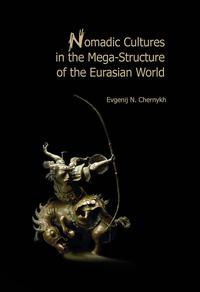
Nomadic Cultures in the Mega-Structure of the Eurasian World
Покупка
Тематика:
Этнография народов зарубежных стран
Издательство:
Academic Studies Press
Автор:
Chernykh Evgenij N.
Год издания: 2017
Кол-во страниц: 697
Дополнительно
Вид издания:
Монография
Уровень образования:
Дополнительное профессиональное образование
ISBN: 978-1-61811-553-9
Артикул: 694354.02.99
Доступ онлайн
1 800 ₽
В корзину
Two major dividing lines have formed the megastructure of Eurasia, determining the historical epochs of the continent’s peoples. The first, vertical (longitudinal) line has separated East and West since the Paleolithic Age. The East was dominated by Mongol peoples speaking Sino-Tibetan, Manchu-Tungus, and Altaic languages. The Caucasoid peoples of the West spoke mostly Indo-European, Semite, and Finno-Ugric languages. The second line divided the continent horizontally (by latitude) into North and South. This division was closely connected with the Eurasian Steppe Belt. To the north of it lay the world of hunter-gatherers and fishermen. To the south, settled agriculture was dominant. The Steppe Belt itself was the domain of pastoralists, the nomadic and semi-nomadic herders. These lines converged at the entrance to the Great Silk Road. With the swift development of horse domestication and horseback riding, the nomads moved - from the Early Metal Age (V-IV BCE) to the Genghis Khan's and Genghisids Great Empire (13-15 cents. AD) - to the forefront of Eurasian history as their world became increasingly involved in dramatic and sometimes tragic relationships with their southern neighbors. This book focuses on the tangle of problems of these nomadic peoples’ history.
Скопировать запись
Фрагмент текстового слоя документа размещен для индексирующих роботов
Е v g e n i j  N .  C h e r n y k h
Nomadic Cultures
in the Mega-Structure
of the Eurasian World
Translated by Irina Savinetskaya and Peter N. Hommel
Translated by Irina Savinetskaya and Peter N. Hommel
Nomadic Cultures
in the Mega-Structure
of the Eurasian World
Е v g e n i j  N. C h e r n y k h
LRC Publishing House
Library of Congress Cataloging-in-Publication Data:
Names: Chernykh, E. N. (Evgeniæi Nikolaevich), 1935- author.
Title: Nomadic cultures in the mega-structure of the Eurasian world / Evgenij  N. Chernykh;
translated by Irina Savinetskaya and Peter N. Hommel.
Other titles: Kul§tury nomadov v megastrukture Evraziæiskogo mira. English Description:
Brighton, MA : Academic Studies Press, 2016. | Includes  bibliographical references and index.
Identifiers: LCCN 2017002164 (print) | LCCN 2017002985 (ebook) | ISBN  9781618115522 (hardcover) | ISBN 9781618115539 (electronic)
Subjects: LCSH: Nomads--Eurasia--History--To 1500. | Social  archaeology--Eurasia. | Eurasia-Antiquities. | Mongols--History--To 1500.
Classification: LCC GN387 .C5313 2016 (print) | LCC GN387 (ebook) | DDC  305.9/06918095--dc23
LC record available at https://lccn.loc.gov/2017002164
Copyright © 2017  Academic Studies Press, LRC Publishing House
All rights reserved.
ISBN 978-1-61811-552-2 (hardback)
ISBN 978-1-61811-553-9 (electronic)
Book design by Irina Bogatyreva
On the cover: sculptures by Dashi Namdakov (see pp. 692–693 for details).
Published by Academic Studies Press and LRC Publishing House in 2017
Academic Studies Press
28 Montfern Avenue
Brighton, MA 02135, USA
press@academicstudiespress.com
www.academicstudiespress.com
LRC Publishing House
13/16 B. Lubyanka
Moscow, 107031, Russia
mail@lrc-press.ru
http://www.lrc-press.ru
Table of Сontents
Author's Preface to the English Edition................................................................................................. 15
Translator's Preface to the English Edition.......................................................................................... 17
Acknowledgements........................................................................................................................................ 18
Introduction
A Tragic Century…............................................................................................................................. 20
“Every Earth Zone...”......................................................................................................................... 20
“Earth…the Progenitor of all Things”........................................................................................ 21
Part I.
The Steppe Belt in the Mega-Structure of the Eurasian World
Chapter 1. The Formation of the Eurasian World...................................................................... 27
Structure and Mega-Structure in Eurasian Geoecology.................................................... 27
Culture and Subsistence Strategy............................................................................................... 27
The Long Road to a Continental Mega-Structure ................................................................ 29
Four Continental “Enclaves”......................................................................................................... 30
Chapter 2. Transitions from North to South: Geoecology, Subsistence
and the Eurasian Steppe Belt........................................................................................... 32
North—South, East—West ........................................................................................................... 32
The Geoecological “Cake” of Eurasia ........................................................................................ 33
Differences between the Domains............................................................................................. 35
The Geoecology of the Eurasian Steppe Belt......................................................................... 36
The West Eurasian Steppe and its Borders............................................................................ 37
The Dzungarian Gate and Mongolian Mountain Steppe................................................... 39
Arabian Desert Plateaus................................................................................................................. 45
The Domain of Nomadic Culture................................................................................................. 46
Chapter 3. Transitions from East to West: Across the Layers of the Eurasian
Geoecology................................................................................................................................. 49
The East in Eurocentric Perspective......................................................................................... 49
Dividing Lines and Defining Borders:
The Mountains between East and West..................................................................... 50
The Line between Asia and Europe........................................................................................... 51
West and East Beyond the Geoecological Framework...................................................... 55
Anthropology...................................................................................................................................... 55
Linguistics............................................................................................................................................. 56
Ideological Systems.......................................................................................................................... 58
Table of Contents
Part II.
The Archaeology of Nomadic Cultures
Chapter 4. Archaeology and History: Sources of Difference................................................ 67
Archaeology and History: Pre-Literate and Literate.......................................................... 67
Understanding Differences in Method and Approach ...................................................... 68
Interpreting Archaeological Sources......................................................................................... 70
The Complexity of Burial Structures......................................................................................... 72
Archaeologists as the Denizens of the Afterworld.............................................................. 75
The “Mongolian Syndrome” of Nomadic Cultures............................................................... 77
Chapter 5. “Gifts” from the Nomads: Pastoral Contributions to World History........ 79
Self-Perception and the Perception of Others: Archetype of Narcissism.................. 79
Perception of the Steppe Nomads.............................................................................................. 80
Horse Riding........................................................................................................................................ 82
Monotheism......................................................................................................................................... 84
Mounds and Mausoleums ............................................................................................................. 85
The “Bridge” between East and West....................................................................................... 88
The Tides of Cultural Influence................................................................................................... 88
Chapter 6. Nomadic Cultures in the Early Metal Age: Archaeological Time,
Technology and Territory ................................................................................................. 90
The Duration of Archaeological Time....................................................................................... 90
Riders and Metal................................................................................................................................ 91
Metal and the “Ages” of Prehistory............................................................................................. 91
At the Origins of Metallurgy.......................................................................................................... 92
Other Innovations of the Early Metal Age............................................................................... 94
Accepted Norms and Acceptable Industries ......................................................................... 95
Early Metal Age as a Eurasian Phenomenon......................................................................... 96
Territorial “Leaps” of Early Metal Age Cultures................................................................... 96
The Problem of Spatial Stagnation............................................................................................. 98
Chapter 7. The “Proto-Metal” Age in Eurasia............................................................................. 100
The Roots of the Early Metal Age............................................................................................. 100
Eastern Anatolia (Çayönü Tepesi, Tell Halula, Nevali Çori and Göbekli Tepe,
Körtik Tepe.......................................................................................................................... 101
Central Anatolia (Aşikli Höyük, Çatal-Höyük).................................................................... 108
The Levant (Jericho and Tell Aswad)..................................................................................... 110
The End of the “Proto-Metal” Age........................................................................................... 112
Chapter 8. Metallurgical Revolution in the Carpatho-Balkan Region......................... 114
Beginning of the Metal Age: Chalcolithic/Eneolithic...................................................... 114
The Balkan Neolithic..................................................................................................................... 114
The Structure of the Carpatho-Balkan Metallurgical Province................................... 116
The Central Block .......................................................................................................................... 117
The Varna Necropolis................................................................................................................... 118
Table of Contents
The Ai Bunar Copper Mine......................................................................................................... 121
The Second Block: The Tripolye Community..................................................................... 124
The Third Block: Herders in the Steppe .............................................................................. 126
Cultural Continuity in the Steppe............................................................................................ 129
Driving Change................................................................................................................................ 130
Chapter 9. The Origins of the Circumpontic Metallurgical Province........................... 132
The Emergence of a New Province and the Start of the Early Bronze Age............ 132
The Mounds of the “Maykop”.................................................................................................... 134
“Maykop” Settlements and Economy..................................................................................... 142
The Mysteries of the “Maykop” ................................................................................................ 143
Chapter 10. The Circumpontic Metallurgical Province and
Caucasian “Corridor”......................................................................................................... 148
The Turn of the Middle Bronze Age in the Southern Domain..................................... 148
The “Occupation” of the Carpatho-Balkan Zone............................................................... 148
Arslantepe: The “Hall of Weapons” and the “Royal Tomb”........................................... 152
The Metal in Arslantepe and Its Parallels ........................................................................... 154
Traces of the South in the “Maykop” North......................................................................... 155
From the Proto-Circumpontic to the Circumpontic Metallurgical Province......... 157
The Drift of Gold around the Black Sea................................................................................. 161
Northern Axes in the South ....................................................................................................... 165
Chapter 11. The Circumpontic Province and the Nomads of the Steppe Belt......... 167
The Middle Bronze Age in the Northern Domain ............................................................ 167
Three Groups of North-Caucasian Cultures........................................................................ 167
An Impulse to the North: The Steppe Kurgan Cultures ................................................. 170
The “Yamna” Archaeological Community ........................................................................... 171
The “Pioneers” of Mining-Metallurgical Industries in the Steppe ............................ 173
The First Wave of Nomadic Migration from West to East ............................................ 175
The Catacomb Archaeological Community ........................................................................ 177
The Radiocarbon Chronology of Steppe Cultures and its paradoxes....................... 178
Montelius’s Morphological Paradigm and the Steppe Communities....................... 183
Chapter 12. Great Leap and Great Stagnation........................................................................... 185
The Late Bronze Age .................................................................................................................... 185
A Genie, Bursting out of the Furnace..................................................................................... 185
Defining the Great Stagnation .................................................................................................. 187
The Cultural Core of Eurasia...................................................................................................... 188
Chapter 13. The Second Millennium: Revolutionary Changes in
the Eurasian Steppe........................................................................................................... 190
From the Ruins of the Circumpontic Province................................................................... 190
The West-Asian Metallurgical Province: Change in the Character
of Cultures............................................................................................................................ 191
The “Democratic” Character of the Steppe Cultures ...................................................... 192
Table of Contents
The Dawn of the West-Asian Province.................................................................................. 193
The West-Asian Province: The Period of Stabilization................................................... 196
The Kargaly Mining-Metallurgical Center Phenomenon............................................... 199
The Disintegration of the West-Asian Province................................................................ 204
The Second and Third Waves from the West to the East............................................... 209
The Peculiarities of the West-Asian Province and a Number of Unanswerable
Questions.............................................................................................................................. 210
Chapter 14. The Neighbours of the West-Asian Metallurgical Province.................... 211
The Formation of New Systems................................................................................................ 211
The European Metallurgical Province .................................................................................. 212
The Caucasian Metallurgical Province ................................................................................. 218
The West-Asian, European, and Caucasian Provinces:
The Differences in Focus................................................................................................ 223
The Iranian-Anatolian Metallurgical Province................................................................... 225
The Hyksos—Manetho—Josephus Flavius......................................................................... 230
Chapter 15. From the Centre of Asia to the West: the Forerunners of
Genghis Khan?....................................................................................................................... 234
The Seima-Turbino Transcultural Phenomenon............................................................... 234
Cemeteries or Memorial Sanctuaries?................................................................................... 235
The Metal of “Seima-Turbino”................................................................................................... 238
Chemical-Metallurgical Groups ............................................................................................... 241
Animal Images on the “Seima-Turbino” Metalwork........................................................ 242
The Cultures of Central Asia and the “Mongolian Syndrome”..................................... 244
A Caravan of Animals: The “Hallmarks” of Strangers from the East........................ 245
Foreign Warriors...............................................................................................................................247
The End of the Seima-Turbino Phenomenon ........................................................................249
Chapter 16. East Asian Steppe and Ancient Chinese Metallurgical
Provinces.................................................................................................................................. 250
In Search of “Seima-Turbino” Heritage.................................................................................. 250
The Karasuk Culture and the East Asian Steppe Metallurgical Province............... 251
The Ancient Chinese (Shang-Zhou) Metallurgical Province........................................ 255
Chapter 17. At the Roots of the Age of Iron................................................................................. 264
The Fifth Age of Metal.................................................................................................................. 264
The Spatial and Chronological Framework of the Iron Age............................................267
The Periodization of Technological and Social Development:
The Problem of Coordination...................................................................................... 267
Chapter 18. The Scythian World through the Eyes of Herodotus................................... 270
The Scythians: Who Are They?................................................................................................. 271
The Origins of the Scythians According to Herodotus ................................................... 272
On the Funerals of Kings............................................................................................................. 274
The Scythians and the Hellenes: Inter-Perceptions ....................................................... 278
Table of Contents
Chapter 19. The Scythian World through the eyes of Archaeologists......................... 281
The Scythians: Who Are They (Archaeologically)?.......................................................... 281
Two Thousand Years On: The Heirs of the “Maykop” Culture .................................... 282
The Greatness of Scythian Burial Mounds .......................................................................... 283
The Royal Kurgans and their Geography.............................................................................. 288
Scythian Metals and Their Sources......................................................................................... 290
Scythian Gold.................................................................................................................................... 293
The Rejection of the Old World................................................................................................. 298
The Irrational Aspect of Culture.............................................................................................. 301
The Sarmatians Replace the Scythians.................................................................................. 303
Part III.
Nomadic Culture in Historical Context
Chapter 20. The Transformation of the Pastoralists of Arabia....................................... 309
On the Sources of Revelation..................................................................................................... 309
The Battle of Badr and the Beginning of the Muslim Conquests............................... 311
First Wave of Conquests.............................................................................................................. 313
Second Wave of Conquests: Iberian Peninsula.................................................................. 314
Battle of Talas and Dzungarian Gate...................................................................................... 317
Chapter 21. A Collision of Worlds: Islam and Catholicism................................................. 319
Intellectual Rise in Arab Caliphates........................................................................................ 321
Geographical Lore in Europe..................................................................................................... 322
Europe Aims at Palestine............................................................................................................ 325
The People’s Crusade.................................................................................................................... 326
The Capture of Jerusalem............................................................................................................ 327
The Further Adventures of the Cross..................................................................................... 330
Chapter 22. The first Wave from the East: the Huns.............................................................. 333
Collapse of the Pillars of Stability............................................................................................ 333
The Huns in the West.................................................................................................................... 334
Attila the Hun................................................................................................................................... 337
After Attila......................................................................................................................................... 341
Chapter 23. The “Huns” in the East.................................................................................................. 344
Where are their Roots?................................................................................................................ 344
The Xiongnu and the Han: the Reliability of Chinese Texts.......................................... 345
A Pendulum of Victory and Defeat.......................................................................................... 347
Weak Han, Strong “Huns”............................................................................................................ 349
A Telling Exchange between Chanyu and Emperor......................................................... 350
Enticing the Xiongnu—the advice of Jia Yi.......................................................................... 351
The Importance of Military Organization—the Advice of Chao Cuo........................ 354
Strong Han, Weak “Huns”............................................................................................................ 357
Winning Jia Yi’ recommendations?......................................................................................... 358
The Tombs of the Eastern “Huns”............................................................................................ 360
Table of Contents
Chapter 24. A Second Wave from the East: the Turks........................................................... 367
Chaos in Peoples, Сhaos in Chronicles.................................................................................. 367
The Successors of the Xiongnu: Rouran and Xianbei...................................................... 368
Turkic Khanates.............................................................................................................................. 370
Rhythms of Victory and Defeat................................................................................................. 374
The Turkic World............................................................................................................................ 375
In Search of Correspondance between Written
and Archaeological Records......................................................................................... 377
Chapter 25. The heirs of the Western Turkic khanate......................................................... 380
Who are the Bulgars?.................................................................................................................... 380
Khazars and their Khanate......................................................................................................... 383
The Oghuz.......................................................................................................................................... 387
Catholic crusaders and the Cumans, a Turkic nomadic people.................................. 388
Chapter 26. The Third Wave from the East: China and the Mongols............................ 392
The “Secret History” of the Mongols...................................................................................... 392
Mengda beilu.................................................................................................................................... 394
Dynastic Histories and Chronicles.......................................................................................... 395
Childhood and Adolescence of Temujin................................................................................ 398
The First Steps of Genghis Khan.............................................................................................. 401
The Year of the Tiger..................................................................................................................... 403
The conquest of Tangut: the Western Xia Dynasty and
the Death of Genghis Khan........................................................................................... 405
The Defeat of the Jurchen Jin .................................................................................................... 406
The Demise of the Song Dynasty............................................................................................. 407
The Mongols in Tibet.................................................................................................................... 408
Centaurs with Ballistae................................................................................................................ 409
The Great Wall of China............................................................................................................... 411
Chapter 27. Third Wave from the East: the Mongols and world of Islam.................. 415
Beginning: the First Mongol Campaign to the West........................................................ 415
The fall of Khwarezm.................................................................................................................... 417
From Samarkand to Kalka and back to Mongolia............................................................. 421
From Hatred to Flattery............................................................................................................... 423
Chapter 28. A Third Wave from the East: the Mongols and
the Christian World............................................................................................................ 429
Unexpected strangers................................................................................................................... 429
The second Expedition to the West: A Decision to conquer the World................... 431
Endangered Rus’............................................................................................................................. 432
The Catholic World alerted........................................................................................................ 433
Attempts to organize Collective Resistance........................................................................ 436
Catholics take a more rationalized Approach.................................................................... 437
William of Rubruck and Marco Polo....................................................................................... 443
Похожие Показать весь список
Доступ онлайн
1 800 ₽
В корзину