
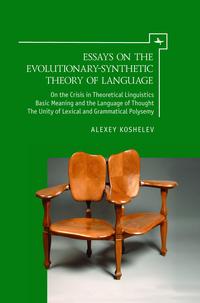
Essays on the
Evolutionary-Synthetic
Theory of Language
Покупка
Тематика:
Общие вопросы. Лингвистика
Издательство:
Academic Studies Press
Автор:
Koshelev Alexey
Год издания: 2019
Кол-во страниц: 269
Дополнительно
Вид издания:
Монография
Уровень образования:
Дополнительное профессиональное образование
ISBN: 978-1-64469-003-1
Артикул: 872301.01.99
Доступ онлайн
1 800 ₽
В корзину
This book implements a multidisciplinary approach in describing language both in its ontogenetic development and in its close interrelationship with other human subsystems such as thought, memory, and activity, with a focus on the semantic component of the evolutionary-synthetic theory. The volume analyzes, among others, the mechanisms for grammatical polysemy, and brings to light the structural unity of artefact and natural concepts (such as CHAIR, ROAD, LAKE, RIVER, TREE). Additionally, object and motor concepts are defined in terms of the language of thought, and their representation in neurobiological memory codes is discussed; finally, the hierarchic structure of basic meanings of concrete nouns is shown to arise as a result of their step-by-step development in ontogeny.
Тематика:
ББК:
УДК:
ОКСО:
- ВО - Бакалавриат
- 45.03.01: Филология
- ВО - Магистратура
- 45.04.01: Филология
ГРНТИ:
Скопировать запись
Фрагмент текстового слоя документа размещен для индексирующих роботов
Essays on the Evolutionary-Synthetic Theory of Language
Moscow & Boston
ALEXEY KOSHELEV
Translated by
Alexander Kravchenko
in collaboration with
Jillian Smith
ESSAYS ON THE
EVOLUTIONARY-SYNTHETIC
THEORY OF LANGUAGE
On the Crisis in Theoretical Linguistics
Basic Meaning and the Language of Thought
The Unity of Lexical and Grammatical Polysemy
Library of Congress Cataloging-in-Publication Data:
Names: Koshelev, A. D. (Alekseæi Dmitrievich), author. | Kravchenko, A. V.
   (Aleksandr Vladimirovich), translator. | Smith, Jillian, translator.
Title: Essays on the evolutionary-synthetic theory of language / Alexey
   Koshelev ; translated by Alexander Kravchenko with Jillian Smith.
Other titles: Ocherki çevolëiìuëtìsionno-sinteticheskoæi teorii ëiìazyka.
   English
Description: Boston : Academic Studies Press, [2019] | Includes
   bibliographical references and index. | Translated from Russian.
Identifiers: LCCN 2018057558 (print) | LCCN 2018058089 (ebook) | ISBN
   9781644690031 (ebook) | ISBN 9781644690024 (hardcover)
Subjects: LCSH: Language and languages--Philosophy. | Language and
   languages--Origin. | Cognitive grammar.
Classification: LCC P107 (ebook) | LCC P107 .K72613 2019 (print) | DDC
   401--dc23
LC record available at https://lccn.loc.gov/2018057558
Copyright © 2019 LRC Publishing House
Copyright © 2019 А. D. Koshelev
Copyright © 2019 A. V. Kravchenko & А. D. Koshelev,
translation into English
All rights reserved
ISBN 978-1-64469-002-4 (hardback)
ISBN 978-1-64469-003-1 (electronic)
Typeset by LRC Publishing House
Russia, Moscow, Bolshaya Lubyanka, 13/16
http://www.lrc-press.ru/?lang=en
Published by Academic Studies Press in 2019
28 Montfern Avenue
Brighton, MA 02135, USA
press@academicstudiespress.com
www.academicstudiespress.com
Contents
Acknowledgements .................................................................................................. ix
Preface.........................................................................................................................x
1. The place of the evolutionary-synthetic theory of language
among the ranks of linguistic theories...................................................................x
2. Peer reviews of the evolutionary-synthetic theory................................................ xii
3. About the book contents....................................................................................... xiii
Chapter 1
On the contradictory nature of contemporary linguistic theories.
and how to change it for the better...........................................................................1
§ 1. Introduction............................................................................................................1
§ 2. A compendium of incompatible linguistic frameworks ........................................3
§ 3. Contrastive analysis of some mutually contradicting linguistic theories...............7
1. Introduction......................................................................................................7
2. On the role of language in thought...................................................................8
3. Is language an autonomous module (“cognitive organ”)? .............................12
4. Other opposing assumptions in the theories under discussion.......................13
§ 4. Contradictory descriptions of particular linguistic problems...............................15
1. The incompatibility of theories of lexical polysemy......................................15
2. Contradictory descriptions of the syntax-lexicon interface............................16
3. Theories of language origin and evolution.....................................................16
§ 5. The futility of attempts to reach a consensus ......................................................17
1. Unproductiveness of scholarly polemics........................................................17
2. Inefficiency of interdisciplinary approaches...................................................18
§ 6. Is linguistics a natural science?............................................................................19
§ 7. The crisis and its causes.......................................................................................22
1. Is “multiparadigmality” typical of linguistics?...............................................22
2. The status of linguistics as a science..............................................................22
3. The root of trouble..........................................................................................24
vi
Contents
§ 8. Principles of an evolutionary-synthetic theory of language.................................26
§ 9. Crisis in the cognitive sciences ...........................................................................27
1. Contradictory frameworks in cognitive sciences............................................27
2. The cause of the crisis....................................................................................31
3. Towards a unified cognitive paradigm............................................................33
Chapter 2
A reference-based approach to describing notional words...................................35
§ 1. A reference-based approach to lexical semantics.................................................35
1. The dual structure of lexical meaning ...........................................................35
2. Basic meanings of the words chair and armchair .........................................50
§ 2. An analysis of basic meanings of the action verbs udarit’ ‘hit-PF’,
tolknut’ ‘push-PF’, padat’ ‘fall-IMP’, brat’ ‘take-IMP’
and vzbirat’sja ‘climb-IMP’ ................................................................................58
1. Introductory remarks .....................................................................................58
2. Contact verbs: udarit’ ‘hit-PF’, kosnut’sja ‘touch-PF’,
tolknut’ ‘push-PF’..........................................................................................60
3. The verb padat’ ‘fall-IMP’ ............................................................................67
4. The verb brat’ ‘take-IMP’  /  vzjat’ ‘take-PF’...................................................69
5. The verb vzbirat’sja ‘climb’ ...........................................................................78
§ 3. Verbs of spatial orientation.: stojat’ ‘stand’, sidet’ ‘sit’,
ležat’ ‘lie’, and viset’ ‘hang’ ...............................................................................83
1. The verb viset’ ‘hang’.....................................................................................83
2. The verbs stojat’ stand’, ležat’ ‘lie’, and sidet’ ‘sit’.......................................89
§ 4. The motion verbs. idti ‘walk’, bežat’ ‘run’, polzti ‘crawl’,
šagat’ ‘step/stride’, prygat’ ‘jump’, and exat’ ‘go/ride/drive’..............................94
1. The motion verbs idti ‘walk’ and bežat’ ‘run’................................................94
2. A comparative description of the verbs idti ‘walk’, bežat’ ‘run’,
polzti ‘crawl’, prygat’ ‘jump’ and šagat’ ‘step/stride’.................................110
3. Basic meaning of the verb exat’ ‘go/ride/drive’ ..........................................112
§ 5. The structure of lexical polysemy......................................................................117
1. Reference in lexicology ...............................................................................117
2. Lexical polysemy..........................................................................................119
3. Supplement. Three contemporary approaches to lexical polysemy............127
§ 6. 	Appendix 1. Excerpts from the email correspondence
between A. D. Koshelev and I. A. Mel’čuk (February—March 1995).............133
§ 7. Appendix 2. An infant’s early acquisition of the laws of nature .......................141
1. An infant’s view of the physical world.........................................................141
2. Formation of causal relationships.................................................................143
Contents
vii
Chapter 3
Basic-level concepts as the neurobiological codes for memory..........................146
§ 1. Concrete concepts and motor concepts..............................................................146
1. Introduction. Two interpretations of basic-level concrete concepts.............146
2. Functional schema of basic-level concepts..................................................147
3. The function of an object and a linguistic explanation of this function.......149
4. A linguistic explanation of the concept functional schema..........................151
5. Neurobiological grounds for the basic concept schema...............................152
6. Motor concepts.............................................................................................154
7. Concrete concepts tropinka ‘footpath’, dorožka ‘track’,
doroga ‘road’............................................................................................156
8. Concepts ozero ‘lake’ and reka ‘river’.........................................159
9. The concept derevo ‘tree’....................................................................161
10. Appendix. On the dual nature of human categories....................................163
§ 2. On the psychophysical state and the neurobiology of human actions ..............164
1. Events and their storage in memory (the neural codes of memory).............164
2. Psychophysical state as a memory code for interaction...............................166
3. Biomechanical models of walking and running...........................................170
4. On recognition of observed actions..............................................................172
5. Mirror neurons and action recognition.........................................................173
6. Canonical neurons and object recognition....................................................176
Chapter 4
Elements of a sensory grammar............................................................................178
§ 1. On the basic and derivative meanings. of nominal
genitive constructions in Russian (ručka dveri handle-Nom door-Gen,
vetka dereva branch-Nom tree-Gen).................................................................178
1. The ‘part-whole’ relationship and its linguistic representation....................178
2. Objects and their functional parts.................................................................181
3. The basic meaning of the nominal genitive construction Y X-Gen..............182
4. The derivative meanings of the nominal genitive........................................183
5. Objects with a multilevel partitive structure.................................................183
6. The partitive structure of plants....................................................................184
7. The partitive structure of animals and humans.............................................186
§ 2. On structural and genetic similarity. of lexical and grammatical categories.
The meaning of transitivity ...............................................................................189
1. The structure of basic meaning.....................................................................189
2. The structure of polysemy............................................................................189
3. The meaning of transitivity...........................................................................190
viii
Contents
§ 3. The basic and derivative meanings of voice.
The active, passive, and reflexive meanings......................................................194
1. A cognitive approach to the analysis of voice meanings..............................194
2. The active voice............................................................................................198
3. The reflexive voice: myt’sja ʻwash-Reflʼ, kutat’sja ʻmuffle-Refl up
[in something]ʼ, brit’sja ʻshave-Reflʼ...........................................................198
4. The passive voice: mašina moetsja ʻthe car is washing-Reflʼ,
bel’ё sušitsja ʻthe linen is drying-Reflʼ, dom stroitsja plotnikom
ʻthe house is building-Refl by the carpenterʼ...............................................200
Chapter 5
On the single structure of lexical meanings of nouns and verbs........................203
§ 1. Object and the system of its parts (the partitive concept)..................................203
1. Object and its parts.......................................................................................203
2. The function of an object as the sum of the functions of its parts ...............204
3. The role-based hierarchy of object parts......................................................205
4. The developed concept.................................................................................207
5. How is the main part of an object determined? ...........................................210
6. The functional and physical parts of an object.............................................210
7. On the radial position of the parts of an object ............................................211
8. A developed concept represented as a circle................................................212
9. The recursiveness of a partitive concept ......................................................213
10. A vocabulary of elementary cognitive units ..............................................214
11. On distinguishing physically connected objects ........................................217
§ 2. An object and the system of its properties (the attributive concept).
The basic meaning of a concrete noun .............................................................217
1. An object and its properties..........................................................................217
2. Conceptualization of concrete properties.....................................................219
3. The partitive-attributive extension of a concrete concept
and the basic meaning of a concrete noun ..................................................225
§ 3. A motor concept and its two extensions: partitive and attributive. The basic
meaning of an action verb .................................................................................228
1. The motor concept sxvatit’ ‘grasp’ (seize an object by the hand).......228
2. The action bežAt’ ‘RUN’...........................................................................230
3. The attributive motor concept.......................................................................231
4. The basic meaning of action verbs ..............................................................231
References................................................................................................................233
Index........................................................................................................................249
Acknowledgements
This book represents the result of many years of research. Throughout that
period I have benefited from the support, advice, recommendations, and critical feedback of a large number of people, from close friends and colleagues to
anonymous readers. Unfortunately, in all of my researches I have not been
able to find one like-minded associate who shared the fundamental principles
of the theory of language presented here. Only recently, when in the final
stages of writing this book, I at last found such a like-minded individual. I am
very glad that this person proved to be so well-known and authoritative a linguist as Liudmila Zubkova. Her support, advice, and critical comments were
extremely important to me, and it is to her that I give my first words of
thanks.
I would also like to express my most sincere gratitude to my family, friends,
and colleagues, who have helped me throughout the whole of this work
through their discussions, comments on sections of the manuscript, and more.
These are: Grigorii Bondarenko, Sergei Zhigalkin, Viacheslav Ivanov, Aleksei
Kas’ian, Andrei Kibrik, Mikhail Kozlov, Sergei Krylov, Leonid Krysin,
Iulia Mazurova, Igor’ Mel’čuk, Nikolai Pertsov, Tat’iana Samarina, Tat’iana
Skrebtsova, Georgii Starostin, Iakov Testelets and Ekaterina Iakovleva.
I would also like to thank the many anonymous reviewers for their comments.
I am very grateful to the translators Alexander Kravchenko and Jillian
Smith, who helped me to correct a number of inaccuracies, and to the editor
Vera Stoliarova, for her tireless work on the text throughout its journey to
the press.
Preface
1. 	 The place of the evolutionary-synthetic theory of language
among the ranks of linguistic theories
1.1. Why a new theory of language is needed. When reading the title of this
book the reader may with reason have asked, why is yet another theory of
language needed? Is it possible that the author is unsatisfied with the scores of
theories that already exist? Does he intend to add yet another, thereby coming
close to repeating the situation during the first third of the 19th century when,
according to A. Meillet (see p. 4 below), there were as many versions of general linguistics as there were linguists? 1 (Here and throughout we point to the
pages of this publication with more detailed facts and references.)
To answer these questions it is necessary to begin by outlining the current
condition of theoretical linguistics. The analysis in chapter one will show that
the distinctive characteristic of the current period of theoretical linguistics appears to be the existence in simultaneity of a great number of incompatible
theories of language. While in the mid-1900s it was still possible to speak
about the unity of the various linguistic theories then existing (R. Jakobson,
p. 4), by the end of the 20th century such unity had already disappeared without
a trace (p. 5). This is due to the fact that the common core of linguistic knowledge shared by differing schools of thought has dwindled to an absolute minimum.
The current situation is disastrous, not only for linguistics but also for
interdisciplinary research. Representatives of other human sciences related to
linguistics (psychology, biology, anthropology, etc.) make reference for the
bases of their positions to different and at times contradictory theories of language, leading to growing confusion (pp. 17–18).
1 “Chaque auteur procède à sa manière et il y a, semble-t-il, autant de linguistiques
générales que de linguistes.”
Похожие Показать весь список
Доступ онлайн
1 800 ₽
В корзину