
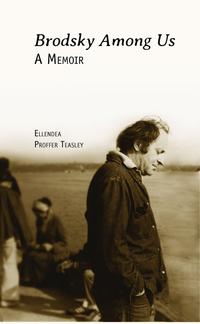
Brodsky Among Us: A Memoir
Покупка
Тематика:
Теория литературы
Издательство:
Academic Studies Press
Год издания: 2017
Кол-во страниц: 191
Дополнительно
Вид издания:
Монография
Уровень образования:
Дополнительное профессиональное образование
ISBN: 978-1-61811-580-5
Артикул: 871816.01.99
Доступ онлайн
1 800 ₽
В корзину
A searingly personal memoir of the great Russian poet by his American friend and publisher, containing much previously unknown material about how Brodsky left Russia and how he made his way in the new world, and how, during the cold war, Americans played a crucial role in his fate.
Скопировать запись
Фрагмент текстового слоя документа размещен для индексирующих роботов
BRODSKY AMONG US
Jews of Russia and Eastern Europe and Their Legacy
Series Editor
Maxim D. Shrayer (Boston College)
Editorial Board
Ilya Altman (Russian Holocaust Center and Russian State University
for the Humanities)
Karel Berkhoff (NIOD Institute for War, Holocaust and Genocide
Studies)
Jeremy Hicks (Queen Mary University of London)
Brian Horowitz (Tulane University)
Luba Jurgenson (Universite Paris IV—Sorbonne)
Roman Katsman (Bar-Ilan University)
Dov-Ber Kerler (Indiana University)
Vladimir Khazan (Hebrew University of Jerusalem)
Mikhail Krutikov (University of Michigan)
Joanna Beata Michlic (Bristol University)
Alice Nakhimovsky (Colgate University)
Antony Polonsky (Brandeis University)
Jonathan D. Sarna (Brandeis University)
David Shneer (University of Colorado at Boulder)
Anna Shternshis (University of Toronto)
Leona Toker (Hebrew University of Jerusalem)
Mark Tolts (Hebrew University of Jerusalem)
BRODSKY AMONG US
A Memoir
ELLENDEA PROFFER TEASLEY
Copyright © 2017 by Ellendea Proffer Teasley
Library of Congress Cataloging-in-Publication Data
Names: Proffer Teasley, Ellendea, 1944- author.
Title: Brodsky among us: a memoir / Ellendea Proffer Teasley.
Description: Boston: Academic Studies Press, 2017. | Series: Jews of
Russia & Eastern Europe and their legacy
Identifiers: LCCN 2016052717 (print) | LCCN 2017008511 (ebook)
ISBN 9781618115782 (hardback)
ISBN 9781618115799 (paperback)
ISBN 9781618115805 (e-book)
Subjects: LCSH: Brodsky, Joseph, 1940-1996. | Poets, Russian—20th
century—Biography. | BISAC: LITERARY CRITICISM / Russian &
Former Soviet Union. | POETRY / Russian & Former Soviet Union.
Classification: LCC PG3479.4.R64 Z846 2017 (print) |
LCC PG3479.4.R64 (ebook) | DDC 891.71/44 [B]—dc23
LC record available at https://lccn.loc.gov/2016052717
Book design by Kryon Publishing Services,
www.kryonpublishing.com
Cover design by Jen Stacey.
On the cover: photograph from the book Portrait of the Poet 1978–1996,
by Marianna Volkova. Reproduced by the author’s permission.
Published by Academic Studies Press in 2017
28 Montfern Avenue
Brighton, MA 02135, USA
press@academicstudiespress.com
www.academicstudiespress.com
For Ross
CONTENTS
A Word about the Context
ix
How Do You Like Your Poets?
2
Great Bird-Cherry Street, 1969
3
The Muruzi House, 1969
6
Lugano, 1969
15
New Year’s Eve, 1970
19
The Roof of the Peter and Paul Fortress
33
The Schwarzenberg Palace: 1972
38
Ann Arbor
61
The Muse and the Addressee
78
The Oldest Modern City
86
Stockholm, 1987
108
A Birthday in New York: May 24, 1990
114
The Akhmatova Museum, 2003
126
Ardis Titles 1971–2002
137
English Language and Bilingual Books
137
Русские издания/Russian Publications
151
Index
160
A WORD ABOUT THE CONTEXT
The world in which Carl Proffer and I met Joseph
Brodsky is long gone—really known only to the
children of the Cold War—so a few words about
the context for this memoir are perhaps necessary
for readers unfamiliar with how young Americans
experienced that period.
The Cold War began as World War II was ending
and military and civilian witnesses saw the Soviet
Union’s takeover of countries all along its borders.
These countries would come to be called the captive or
satellite nations, depending on who was speaking. The
brutal assimilation of these countries led the United
States into a number of wars in response—most notably
in Korea and Vietnam—as well as to bloody interference in the politics of Central and South American
countries. The Soviet justification for its own unacceptable actions was that their enormous country needed
protection—in the form of borderlands—from their
enemies; the American justification for its unacceptable
actions was that Communism led to tyranny and that it
must be stopped wherever it started. This is, of course, a
very simplified explanation, but it will do to indicate the
atmosphere of mutual suspicion between these two
great atomic powers in the 1950s and 1960s.
viii   Brodsky Among Us
Russia had a presence in the everyday lives of young
Americans in the 1950s and 1960s, and that presence
had an emotion attached to it: fear. We hid under our
desks during civil defense drills in school, and we knew
why our parents were building bomb shelters. Bombs
were in our dreams, and the Soviet Union was in our
consciousness as a country that crushed revolts in both
Hungary and Czechoslovakia. The leaders of the Soviet
Union seemed unknowable and that led to a fear that
they might attack us first out of paranoia.
As our generation came to adulthood, its other concern was the gradually increasing American involvement
in Vietnam, a place where our cousins and brothers
would go to fight in what became an incomprehensible
war to stop Communism. A draft was in effect, something that makes the young pay attention to the nature
of a given war. We paid attention and concluded that
this war was not worth the price. Given this looming
presence of the Soviet Union, one might presume that
Carl and I made the decision to study Russian in the
grand tradition of understanding your enemy; but oddly
enough, that was not a conscious motivation for either
of us: we came to Russian studies out of an interest in
one of the world’s great literatures. We came to this
literature by different paths, but our reaction was the
same. This literature—deep, rich, and powerful—was
a revelation after French and English literature, which
was what we knew. In the nineteenth century Pushkin,
Gogol, Tolstoy, Dostoevsky, and Chekhov had somehow
A Word about the Context   ix
emerged from what was mostly an illiterate peasant
country. What followed this golden age was Russia’s
tragic twentieth century, when war, revolution, civil war,
and tyranny combined to almost destroy an entire
culture. The miracle was that it did not entirely succeed.
It was an intense literature, and we were intense people.
Even though Carl Ray Proffer was born in 1938 and
I was born in 1944, and we grew up in different parts
of the country, we shared one thing: there was nothing
about our backgrounds that would have told you that
we would have a life dedicated to Russian literature.
Carl Ray Proffer came from parents who had not
finished high school, but who had done very well nonetheless. Carl went to the University of Michigan at Ann
Arbor intending to be a basketball player or, if that didn’t
work out, a lawyer. In his first year he had to choose
a foreign language to study; he looked at a board listing courses in different languages and saw the Russian
alphabet for the first time. He looked at it and said to
himself “What an interesting alphabet.” He especially
noticed the letter “ж,” shaped like a butterfly, and it
was this beautiful letter that led him to choose Russian,
which in turn led him to classes in Russian literature.
Carl, who had read so little literature of any kind up to
this point, now encountered the writers of the golden
age. This very intelligent man, who, with his exceptional
memory and superior logic, should have been a lawyer,
fell in love with Russian literature. This was a surprise
x   Brodsky Among Us
to everyone around him, and his family worried about
what kind of career he could have in such an unpromising field. He decided to do his dissertation on Gogol.
In 1962 Carl took his first trip to the Soviet Union
and did not have a particularly good time, since the few
Russians he was allowed to meet were mostly monitors
of foreigners. He did, however, manage to do a lot of
traveling around the country and serious research on
Gogol. At a young age he became an excellent teacher,
translator, and scholar, publishing an enormous amount
in a short time. His main subjects—and influences—
were Pushkin, Gogol, and Nabokov.
Unlike Carl, I came from a family of readers, although
no one was particularly interested in foreign languages.
My first Russian contact was with Dostoevsky, whose
Crime and Punishment I read at the age of thirteen.
I was quite aware that I could not really understand
the novel, but I felt its force. When I was fifteen, my
math teacher, who had learned Russian in the army,
lent me a translation of Mayakovsky’s poems, and
I was impressed, especially by “The Backbone Flute.”
(I could never have conceived that I would later come
to know Lily Brik, the woman who had inspired it.)
I majored in French and Russian and went to graduate school at Indiana University. In my first year
of graduate school I read Bulgakov’s The Master and
Margarita and recognized immediately that this novel
was going to be my scholarly focus.
Похожие Показать весь список
Доступ онлайн
1 800 ₽
В корзину